
Every new hire comes with a salary figure. But that number is a lie.
The true cost of bringing an engineer up to speed includes months of reduced productivity, senior engineer time spent mentoring, mistakes made while learning, and—most expensively—the institutional knowledge that has to be transferred one conversation at a time.

The Hidden Costs
What you track—recruiting fees, equipment, HR processing—is maybe 40% of the real cost. The rest is invisible: lost productivity, senior engineer interrupts, and the slow drip of knowledge transfer that happens one Slack message at a time.
True Cost of One $150K Engineer Hire
The Knowledge Transfer Tax
Here's where it gets expensive: institutional knowledge. Every engineering organization accumulates decisions. Why we use this database. Why that service is structured this way. Why we tried microservices and came back to a monolith.
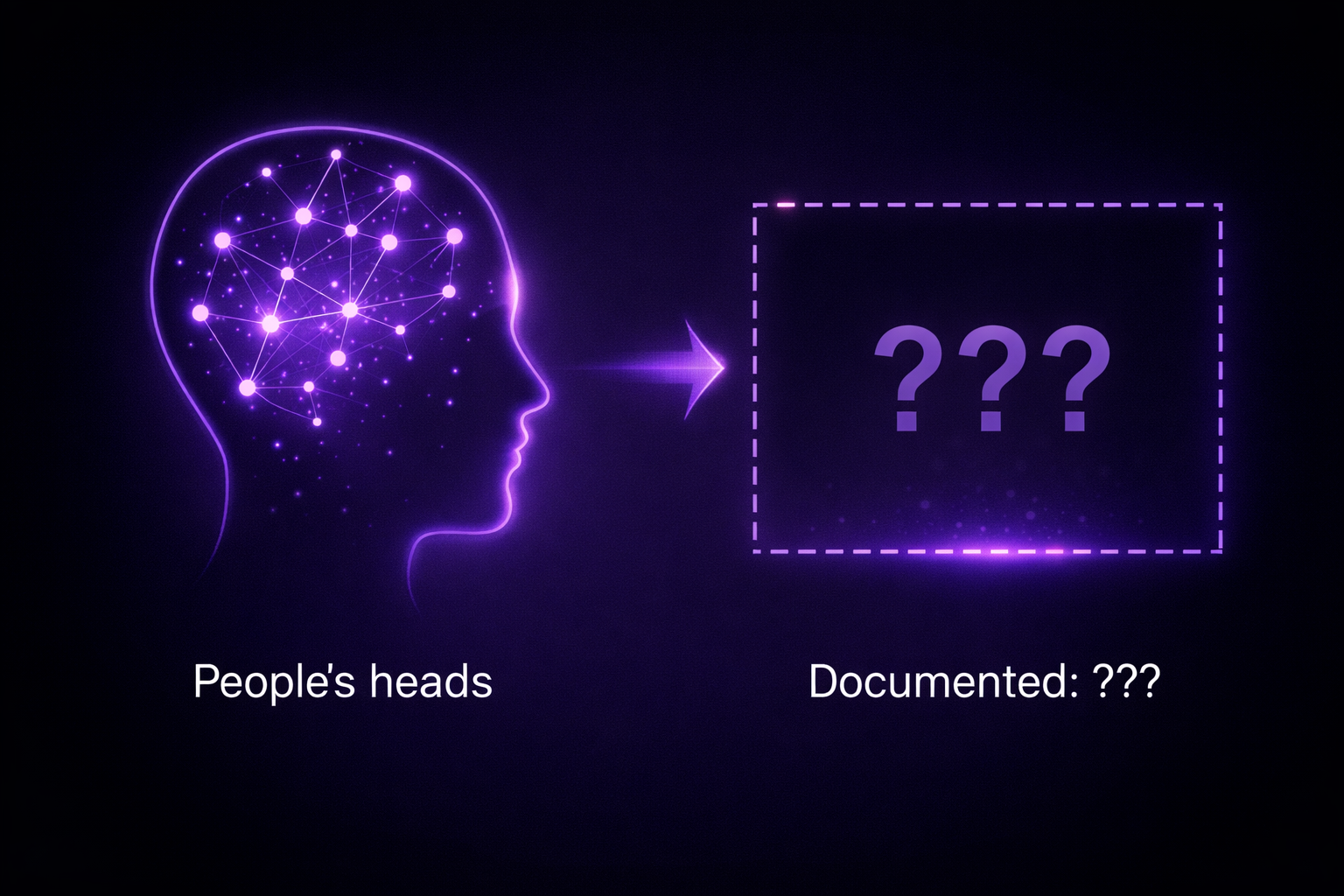
This knowledge exists in two places: people's heads, and nowhere else. When a new engineer joins, there's only one way to get it—interrupt the people who have it.
The Interrupt Math
In interrupt costs alone. Per new hire.
The $47,000 Question
What if you could cut onboarding time in half? The math changes dramatically.
The difference: $35,000 per hire. With 10% annual turnover on a 50-person team, that's $175,000 in annual savings.
What New Engineers Actually Need
They don't need more documentation. They need the right documentation.
- ×Outdated architecture diagrams
- ×Verbose design docs no one maintains
- ×Wikis with conflicting information
- ×"Just ask Sarah" as the answer
- ✓Decision records with context: Why did we choose X over Y?
- ✓Current dependencies: What relies on what?
- ✓Active constraints: What can't we change and why?
- ✓Historical context: What have we tried before?
The Self-Service Principle

81% of people prefer to find answers themselves rather than ask someone. This isn't about being antisocial—it's about learning at your own pace without feeling like a burden.
The Compounding Effect
Every undocumented decision costs you once per onboarding cycle. If you have 50 significant decisions, 10% turnover, and it takes 30 minutes to explain each one...
Building the Onboarding Knowledge Base
- • System boundaries and ownership
- • How to deploy and rollback
- • Who to ask about what
- • Key decisions that affect daily work
- • Architecture rationale for their domain
- • Historical context for current state
- • Active tech debt and workarounds
- • Decisions currently under discussion
- • Cross-team dependencies
- • Long-term architectural direction
- • Deprecated patterns to avoid
- • Areas open for improvement
Measuring Improvement
The true cost of onboarding isn't what you pay—it's what you lose while waiting for new engineers to become productive.
Documentation is the fastest way to cut that time in half.